|
Sea Foam Anniversary Cruise
VI – Leg 2 June 27 – September 8, 2009 |
|
|
|
Ron and CA carefully planning for the trip around Cape Caution. Once out of our cozy Clam Cove we would travel out into Queen Charlotte Strait and out into Queen Charlotte Sound where we no longer have the protection of Vancouver Island keeping the swells away from us. Once out into the Sound we would be open to the mighty Pacific Ocean where swells would rock us for four hours until we either turn into Smith Sound or Rivers Inlet or carry on up Fitz Hugh Sound and enjoy the protection of Calvert Island off our port side. We checked the weather forecast and were suitably pleased to learn that the winds would be calm. We checked the wind speed at Pine Island in the center of Queen Charlotte Strait, Egg Island just off Cape Caution and West Sea Otter which measures the wind and wave heights at a point in Queen Charlotte Sound. If the wave height is 1.0 metres or more we won’t go. Pine Island and Egg Island were reporting winds of 5 nautical miles per hour, which would mean we would not have any waves on top of the swells. There would be fog however so the Captains would have their radar running closely monitoring the blips and blobs they encountered on the screen. Cruise ships in Queen Charlotte Strait often call by radio and let pleasure vessels know where they are and the direction they are heading. Some Captains report into the traffic station on the radio so the operator can keep the commercial traffic aware of who’s out there and what direction everyone is going. |
|
|
|
|
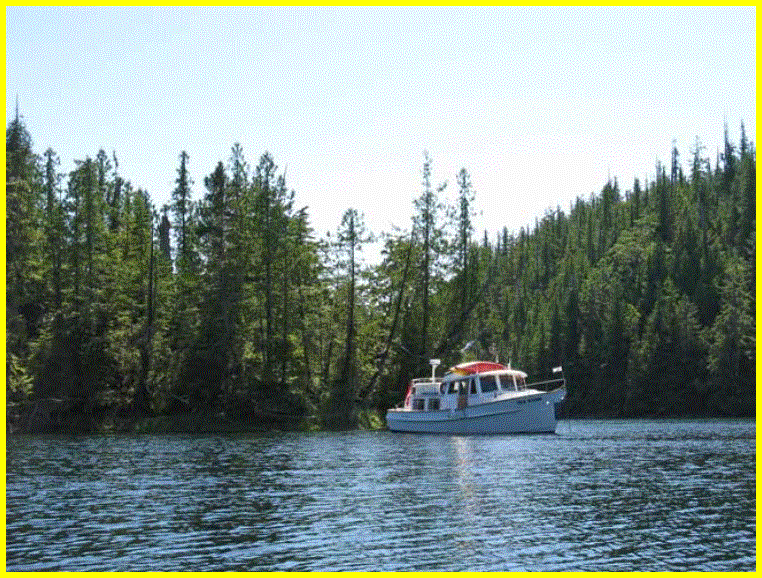
We all set out for Cape Caution at 0700. CA was up at 0400 checking the weather to make sure there were no new developments overnight. The wind was even calmer but the visibility at Pine Island was reported to be zero in fog. Once out in the Strait it wasn’t as bad as all that and when we rounded Cape Caution we were in three foot swells with no waves on top. If the swells weren’t present, which is unlikely in the open sea, the sea would have been flat and oily calm. Ann Aerobic and Sea Foam turned into Smith Inlet and headed to Takush Harbour and into Fly Basin Anchorage. XXIV VII carried on up Fitz Hugh Sound bound for Hakai Pass to catch a big fish. Once we anchored in Fly Basin Captain Bob of the Laurie Lea and Captain Brian from Ocean Point greeted us. They helped us three years ago in this anchorage when we were broken down. Rick had sourced the problem but couldn’t find one final small port to bleed the fuel lines. Captain Bruce from the Hideaway was also on scene that year when we thought we might need a tow back to Port Hardy. Within fifteen minutes of boarding, the problem was rectified and we were on the road again.
|
There are very interesting rocks and vegetation in Fly Basin as pictured here. There is little or no soil and the plants cling to the rock faces. |
|
|
|
|
|
|
|
|
|
|
|
|
|
|
|
|
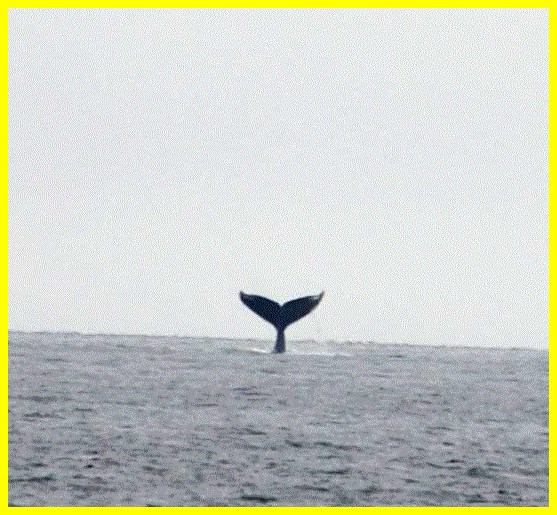
After two nights in Fly Basin we said farewell to Ron and Monica on the Ann Aerobic. They needed to head back southward and be in Octopus Islands in four days to meet up with other friends. We headed Sea Foam out of Smith Inlet and on up Fitz Hugh Sound to meet with April and Mark in Hakai Pass at the north end of Calvert Island. Once passed the open waters in front of Rivers Inlet we were again in calm water behind Calvert Island. We were entertained most of the way by four humpback whales feeding in Fitz Hugh Sound. We saw in the distance the telltale sign – a plume of mist rising up from the water when they exhale. We shut the boat off and just drifted and one big fella’ came twenty feet from the boat and blew a mist of water through his blowhole before taking a dive. There are whirlpools left behind when their huge bodies go under. |
|
|
|
|
|
We arrived in Hakai at 1500 and passed an almost deserved floating fishing lodge as we turned left out of Kwakshua Channel headed for Adams Harbour on the northwest outside edge of Calvert Island. Mark and April were the only ones in the anchorage and we were glad of it because it really doesn’t have much room. The weather has been calm to date but even so the swells were six feet high the day before and Mark and April were unable to fish off their big boat because of the rolling on the outside of Calvert Island in Queen Charlotte Sound.
|
|
|
|
Kona enjoys a beach romp in Choke Pass just around the corner from our anchorage. |
|
|
|
|
Within a few minutes of anchoring the Captains decided to go out fishing in our tender, Catch-Up. The swells were only about 3 feet and the wind was calm. They gathered up their gear and headed out to Odlum Island to catch a halibut. They returned two hours later with bottom fish instead. Two yellow eyed rockfish (red snappers) and a common rock fish that would not have lived if they released him so they decided we would eat him instead. We have to closely follow the rules for fishing to stay out of the Rock Conservation Areas (RCA). Rockfish are often caught by recreational fishers in pursuit of salmon and they, unlike salmon, do not live if you throw them back. The journey from the depths to the surface is too much for them and their stomach or swim bladder blows up and they don’t recover. The yellow eye in the picture looks like his tongue is hanging out but his innards are coming out. Rick took a spiny poke into his finger from the fish in the middle and his finger was quick to swell because of it. These fish have experienced alarming declines so the Department of Fisheries and Oceans (DFO) have moved in to protect them by establishing RCA areas where you cannot fish – PERIOD. |
|
|
|
|
|
|
|
|
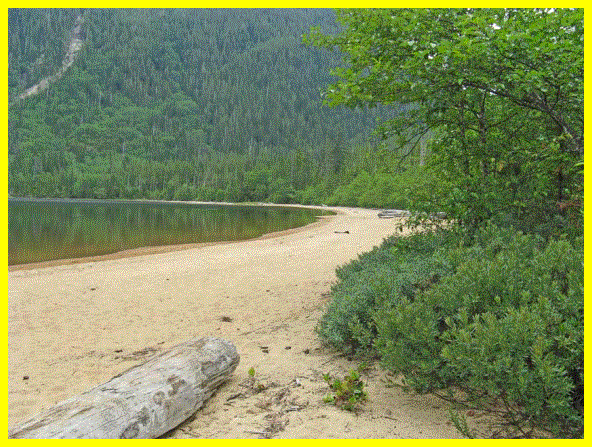
After Hakai Pass we headed into Fisher Channel and anchored in Codville Lagoon Marine Park for the night. The next day we hiked up the 30 minute trail to Sagar Lake. The last time Rick and I were here it was pouring rain and it was still beautiful! How did all that brown sugar sand get there in the first place? Kona had a good time fetching her stick in the water and we had a picnic lunch before hiking back to our boats. |
|
|
|
|
|
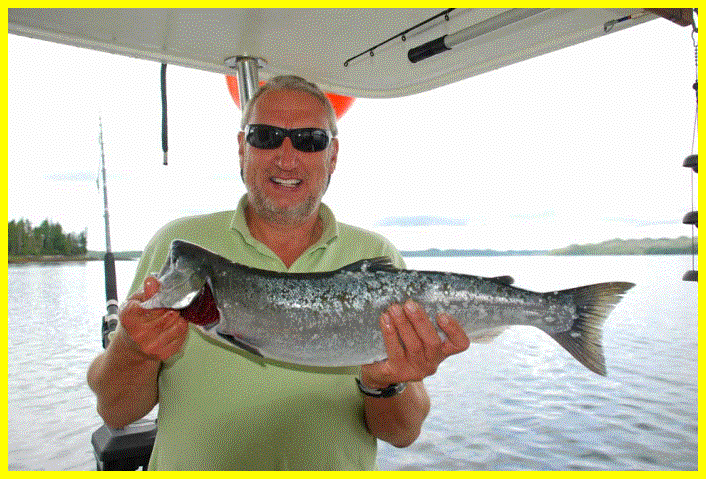
On we went to Ada Cove off Llama Passage. We were treated to a day of fishing on the XXIV VII. Within a short time Captain Rick had a beautiful Coho on his hook and with Captain Mark’s help and April at the helm we had the fish in the net in no time. We used a recipe from Cook’s Afloat and after marinating the fish for 3 hours we barbequed it for 8 minutes and it was delicious! Apple pie for dessert finished a great meal. |
|
|
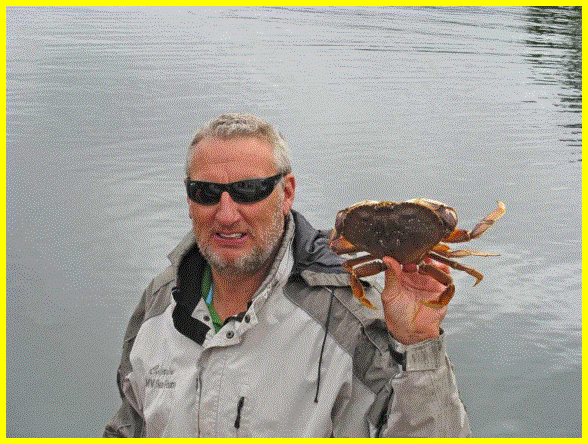
Rick used the salmon head from his catch to bait our crab trap and the next morning proudly displayed his biggest Dungeness crab. Crabs love fresh, bloody bait. Notice his lovely new beard! |
There were 13 crabs in the trap but 5 were females so their lives were spared. The other 8 lie here cleaned and ready for the steam pot. I looked up two recipes in Cook’s Afloat – creamed crab with pasta and corn and crab soup. They were both yummy.
|
|
|
|
|
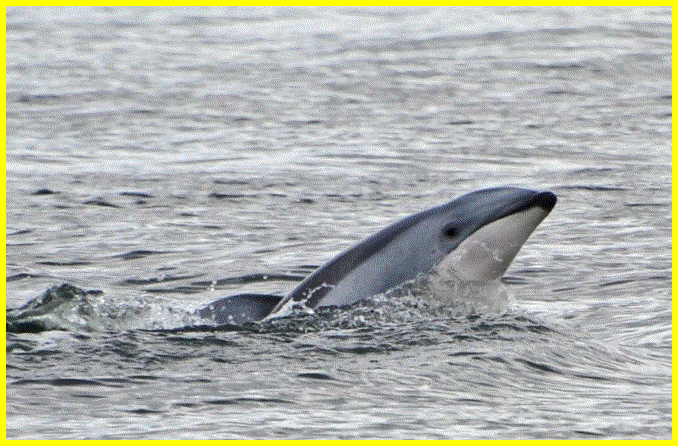
When we left Ada Cove and moved into Llama Pass headed for Bella Bella we were buzzed by a pod of about fifty white-sided dolphins. They were feeding on herring and traveling around with a humpback whale. They were so active when we spotted them – they were leaping high out of the water and turning somersaults much they way you would see them doing tricks at Sea World. |
When they saw us coming near with the boat they moved over to greet us and road in our bow wave as several enjoyed the wave made by our tender. |
|
|
|
|
Bella Bella waterfront home. We stop here for their good water and some groceries and then carry on just around the corner to tie up at the docks in Shearwater to do our laundry. |
We met Dave Letson last year in Port McNeil and he visited us again while tied up in Shearwater. Dave’s uncle owned the original Sea Foam working for Bill Dolmage of Harbour Towing. Dave was on the boat in 1945 heading to the cannery in Butedale with empty cans and back with full cans of salmon bound for Vancouver. He stopped in again this year to visit and told us he was waiting for a group of friends from the Royal Victoria Yacht club to arrive for a gathering. |
|
|
Fishing outside of our anchorage in Wighams Cove. The small opening behind me is the entrance to our spot. I’m after a halibut but would settle for a ling cod. We caught only one rock fish, let him go, and decided to give it up. Yesterday, after spending only one night tied up to dock in Shearwater, we took the boats to a temporary anchorage on the north tip of Campbell Island next to Odin Cove. We left the Sea Foam there and took off in the XXIV VII to fish long the north shore of Campbell Island in Seaforth Channel. I had heard other folks talking on the radio that the fishing was good out there. Sure enough, within 30 minutes Mark had caught two Coho. One would feed us tonight and the other they cut up into steaks of which we were gifted four. Rick didn’t get a chance to put his rod down. No sooner had Mark set up his gear then he had a “fish on”. Two was enough so we went back to the Sea Foam, pulled up our anchor and proceeded to Wigham Cove for the night. |
|
|
|
|
Heading further northward we passed Ivory Island Light Station and traveled into Reid Passage to Oliver Cove Marine Park. It appears that this is a burial site for a bent shaft and propeller left after some unfortunate boater was caught from beneath on this rock. |
Sunset outside our Oliver Cove Anchorage |
|
|
We are on our way to Ivory Island in the Catch-up |
|
From Oliver Cove we visited Ivory Island. We first attempted to follow an old wooden boardwalk trail from the northeast side of Ivory Island near a now derelict boat shed. Signs saying the walkway was condemned didn’t initially deter us but as we started walking on it we realized it was dangerous and not worth breaking an ankle over. We hopped back into our tender and went to the front of the light station that sits on a small island directly in front of Ivory Island. Rick found a small opening where we could land and get out of the swells from Seaforth Channel. We met Bob Wilson and his assistant Renata, relief light station keepers while the regular couple are away for a break. Their two dog were left behind . Bob and Renata are sent to all the stations along the coast when the regular light station keepers take their holidays. There are two houses at each station, one for the head keeper and one for the assistant. Bob is from Burnaby and Renata from Prince Rupert. |
This is the land bridge connecting the light station to Ivory Island taken from the helicopter landing pad. All their supplies are brought in by helicopter and they have no means to get off the island other then this. There is no dock or boat launch for them. Bob and Renata will be two months at this station until the regular keepers return. Heavy equipment is brought in with a large pulley system near one of the main houses. A barge anchors off the small island and they release the pulley to the barge, hook up the heavy items and winch them back to the island. |
|
One of the resident houses looking east, where we came from by Catch-up. Bob told us that there have been storms in the winter during high tide that resulted in some of the building floors becoming flooded. We had read of a storm in 1996 here where the waves came up and were hitting the living room windows. Renata said this was one of the lower stations she had been to. Bob said every light station has its tale of bad storms. A light house keeper and his young family were on Egg Island and a huge wave took the house right off its foundation. The keeper was killed but his wife and children managed to run to higher ground and waited 7 days living in a chicken house until a passing fish boat saw them waving. The Coast Guard presumed them dead and did not come to check for survivors. |
The light. The station also measures wave height, water temperature and wind velocity, which is automatically sent to the Coast Guard by satellite-connected internet. We think their flag needs to be larger. |
|
Looking west from the station, the coastline is more exposed and bare from the extreme weather. |
The grounds are maintained beautifully with flowers, gardens, a greenhouse and hummingbird feeders. This is an old chicken coop looking east toward Shearwater. |
|
Only a tug and barge shared Milbanke Sound with us as we headed across to Higgins Pass from Reid Pass and our anchorage at Oliver Cove. Mark and April left us this morning, headed south for home. It was a beautiful day to travel with a calm open sea. |
|
|
|
|
|
The Captain watches his depth sounder very carefully as we slowly inch our way through Higgins Pass. One area we must cross is very narrow and very shallow. It dries when the tide is at 5 feet. We crossed over this “land bridge” with a 14-foot tide and had a least depth of 8 feet on our sounder. There were a few tense moments as the sound read 4.5 feet but it was determined it was kelp under us that was giving a false reading. We start to get jumpy when the sounder reads 5 feet. |
This is a picture of the shallow area the next day at low tide – 0.3 feet. It looks like another planet with the sea completely drained out of it – which was in fact exactly what happened. |
|
|
|
|
While we were exploring the shallow area the next morning we met Mike Orr and his wife Hyo. They had come through the first tricky part the day before and anchored off to the side before going through the shallow land bridge. Mike wanted to see it at low tide first and take some GPS marks so he would know the area well. While Hyo was working for a short term as a traveling nurse in Bella Bella Mike took a short jaunt as crew on a commercial halibut boat. We traded him pork chops for halibut and both parties were very pleased with the exchange. On our way out for our kayak trip we handed over the pork chops and invited them to dinner after they got through the shallows to anchor near us on the other side. We carried on kayaking and arrived back in time to take pictures of them going through at 1500. |
Hyo maintains a bow watch and Mike consults his GPS marks as they make their way through the now passable area. They had no incidents and anchored up and each took a relaxing ride on their sailing dinghy before joining us for supper. Their plans were to head to the Queen Charlottes for a week or so and then sail to Bamfield at the southwest side of Vancouver Island where Hyo again has a short contract to work as a nurse. They will continue on after that to either Mexico or Hawaii and be back in the fall so Mike can teach a course at Bamfield. He recently completed his PhD in Marine Biology. They are maintaining a blog showing their adventures for friends and family at www.aboardio.blogspot.com |
|
|
We enjoyed a lovely evening exchanging stories and we showed Mike and Hyo some slideshows or our travels to the Queen Charlottes last year. We gave them Andrew Gunson’s book, Adventures of the Miatala with the Naked Canadian, which details Andrew and his family’s trip to the Sea of Cortez. The chart below shows the route we took to get through Higgins Pass. It is a much quicker route to the outside area of the Inside Passage and cuts out at least one day of travel. We passed through here last year from the west side and wanted to explore the area more thoroughly this year. It is a lovely area and really isn’t as frightening as some guide books make it sound. There are many protected anchorages to choose from. It is reported to have a one foot overfall one hour before high tide at the north end of Lohbrunner Island in the narrows. We were there at that time in our tender and did not experience that and we were in a time of extreme high and low tides. A low of .9 feet and a high of 14.3. I would think if we were going to see any rapid water we would have seen it during these tides. The following day we kayaked through the narrows at mid tide and did not have any fast water either. Now that we have seen it at its lowest we will not hesitate to use this waterway when we travel entering from either direction. |
|
Our track through Higgins Passage (sub tidal areas are denoted by green shading) |
|
|
The maze of small islands and barely revealed rocks require a careful watch at the helm as we exit Higgins Passage and moved out into Laredo Sound heading north to Princess Royal Island. |
|
|
|
|
|
The winds are again light as we make our way up Laredo Sound and into Laredo Channel. The flood tide is in our favour and will give us an additional 1-2 knots of speed throughout our travel. The fog is also giving us a break today. |
We passed Mike and Hyo near Helmcken Inlet with a fog bank laying along the shoreline. They were bound for the Estevan Group and hoping to cross Hecate Strait to the Queen Charlottes the next morning. Unlike us, they do not like the light wind circumstance as they motor along with not enough wind to raise their sails. |
|
|
|
|
|
|
|
Looking out from our anchorage early morning as a fog bank rolls through. This was the narrow entrance we navigated through at high tide to get into this protected, and not too deep, anchorage. In the morning as the flood tide came into the anchorage to fill up the basin the water rushed in with whirlpools in the narrowest part. |
Fog banks roll in off of Caamano Sound and the wide open sea beyond into Emily Carr Inlet where we were fishing. |
|
|
|
|
|
Doug and Carole’s home, a 57 foot boat, the MV Surfbird, a wooden hulled boat manufactured on the East Coast. During the winter months Carole and Doug monitor a Gooey Duck Fishery in the Queen Charlotte Islands. Doug gave us some areas where we might have luck catching a halibut and told us the best place to lay our prawn trap in Chapple Inlet. He said if we anchored in Koch Inlet we might see a bear at low tide on the beach off the stream mouth. We saw a doe and her twin fawns but they were too far away from our anchored Sea Foam to get a decent picture. |
|
While out fishing in Emily Carr Inlet we noticed a large boat pulling their tender coming into our area. When we got back to our boat, Doug and Carole Stewart came in their tender to say hello. When they first pulled up I thought Doug looked familiar somehow. Oddly enough, the night before I had been reading Ian McCallister’s book, The Great Bear Rainforest, Canada’s Forgotten Coast, and it was there that I had seen Doug’s picture. (page 95) Doug has worked for the Department of Fisheries and Oceans since the late 70’s and continues to monitor the salmon bearing creeks around Princess Royal Island and Douglas Channel. McCallister writes, “One of a corps of fisheries patrollers knows as a “Creek Walker”. Doug Stewart monitors about 120 salmon spawning systems.” Doug told us there used to be over 15 employed men to work in the area and now there are only two, himself and one other fellow, Stan Hutchings. Doug reports on his findings in the creeks and boards commercial fish boats to determine their catch in order to determine how best to protect the salmon stocks. |
|
|
|
|
|
Halibut Hunter in Emily Carr Inlet |
After fishing we stopped for a picnic here to let Kona have a run around the beach and stretch her legs. The last several days her shore leave has only been a small rock islet or two. |
|
|
|
|
A moon snail eye sac made of sand. The snails build this circular ring out of sand and lay their eggs in the protection of the inside. |
Our picnic site also had a nice forest where Kona could also explore and keep a sharp lookout for bears and wolves. |
|
|
|
|
Kiln Bay anchorage. The water is very deep – around 70 feet and then quickly shoals at a stream mouth. We look to be very close to shore in this picture and we were but the water was still 30 feet deep. We anchored and tied to a tree off our stern so we wouldn’t swing around and have the anchor slip into deep water and away we might go. Doug Stewart told us there is a bear that frequents this stream and grubs around the beach at low tide. We watched for two days but Mr. Bear never came. A doe and twin fawns came down the stream to poke their noses out instead. |
A meal’s worth, 22 big ones! We laid this trap in 350 feet of water in Chapple Inlete and used commercial prawn bait pellets with vegetable oil soaked over them. We left them overnight and the next day I pulled up all 350 feet of line just to get some exercise. Once we get them out of the trap I pull and twist their heads off and take them back to the boat and throw them into the freezer. They are so fresh that you can’t peel them, although you could cook them right in their shells and peel them. |
|
|
|
|
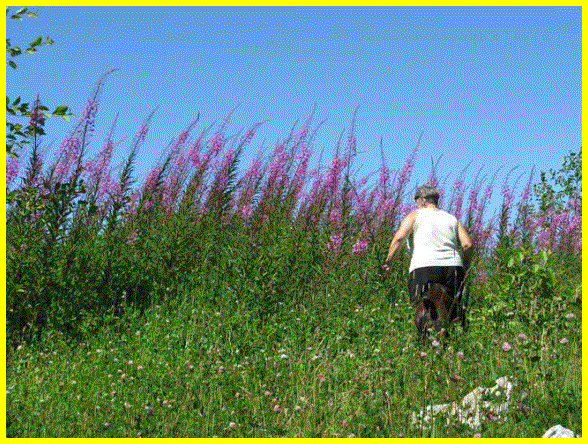
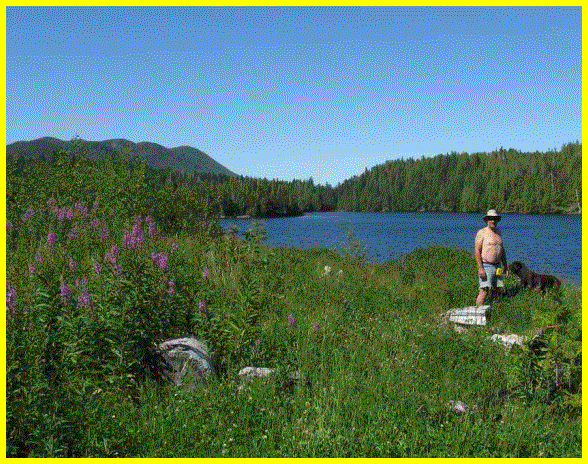
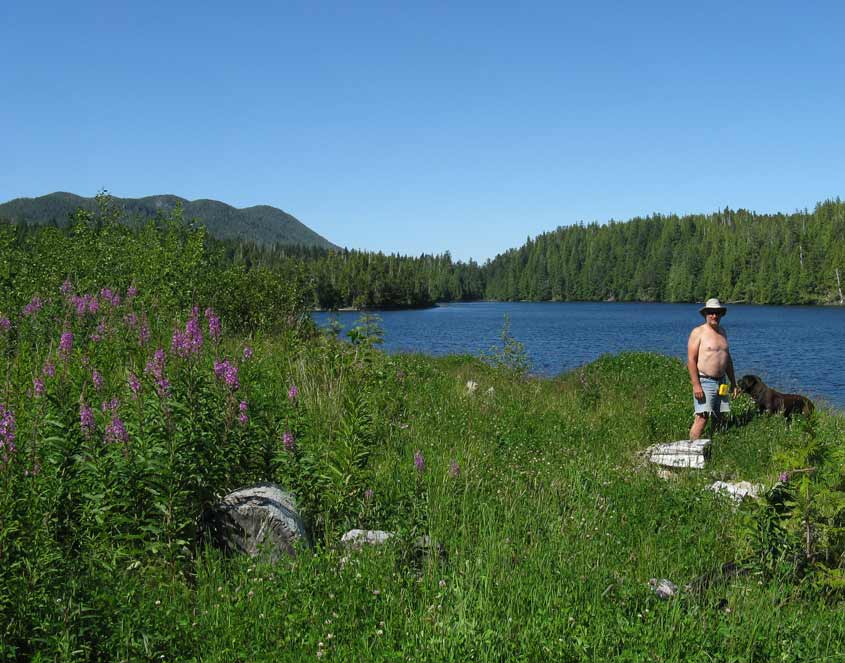
After our prawning we got onto shore to hike around a bit at an abandoned log dump area. The wildflowers were very tall. |
The view over Chapple Inlet looking north. |
|
|
|
|
|
|
|
As we headed away in the Sea Foam from Kiln Bay, Rick went off in the Catch-Up while I circled around in the Sea Foam until he was done. A lot of hard work for only 18 prawns. |
When we turned into Campania Sound and went north along the west side of Princess Royal Island there was a Seiner opening and many boats were in the area. This fellow, unfortunately, got his net caught in his wheel and had to have a scuba diver go under and fix things up. |
|
|
We tied to a dock in Barnard Harbour that is what’s left of a fishing resort when, in the middle of July, they pack up the lodge and barge it to another location in Milbanke Sound. The dock is in good shape and the water is 80 feet deep. The other boaters we met while we were here either trailered their boats to Kitimat and enjoyed the waterways in the area or kept their boats docked in Kitimat and came out for holidays and weekends. Two of the boats we met were from Alberta and drove 12 hours to get to Kitimat to come out for their fishing fix with a bunch of their buddies. A relatively tame mink and an otter family live under and around the dock. The fish cleaning scrapes must keep them happy for parts of the year anyway. |
|
We stopped awhile to watch the Pacific Aggressor haul in their catch. They tie one end of their long net to the shore line and then move away with the boat to form a half circle to catch the fish in. They are no longer allowed to bring their catch in from the stern of the boat but now have to haul the net up to the side and use this giant fish net called a “brailer” to bring the fish onboard to sort the ones they can keep and the ones they have to throw back. This brailer is attached by two cables to a winch and the men take a big scoop from the main net and lift the fish onboard and then dump them into bins. They must have made 7 or 8 scoops in until they reached the bottom of the main net during the time we were watching.
|
|
|
|
|
|
|
|
|
If you don’t have a boat and you like to fish you can fly into King Pacific Lodge in Barnard Harbour by sea plane or helicopter, enjoy 3 meals a day and all the fishing with a guide you like for a mere $1400.00 a day. |
Paying guests from King Pacific Lodge wait patiently for a big one. The young fellow in the brown shirt in the back right is their guide. |
|
Fishing is very serious business! |
|
|
|
The Captain and his first catch of the day. |
|
|
|
|
My first catch! I usually hold the rod and when a fish gets on, I hand it over to Rick to reel it in. After we had caught two, Rick said it was my turn to learn how to reel them in. It wouldn’t matter if I lost it now that we had safely landed 2 into the boat. |
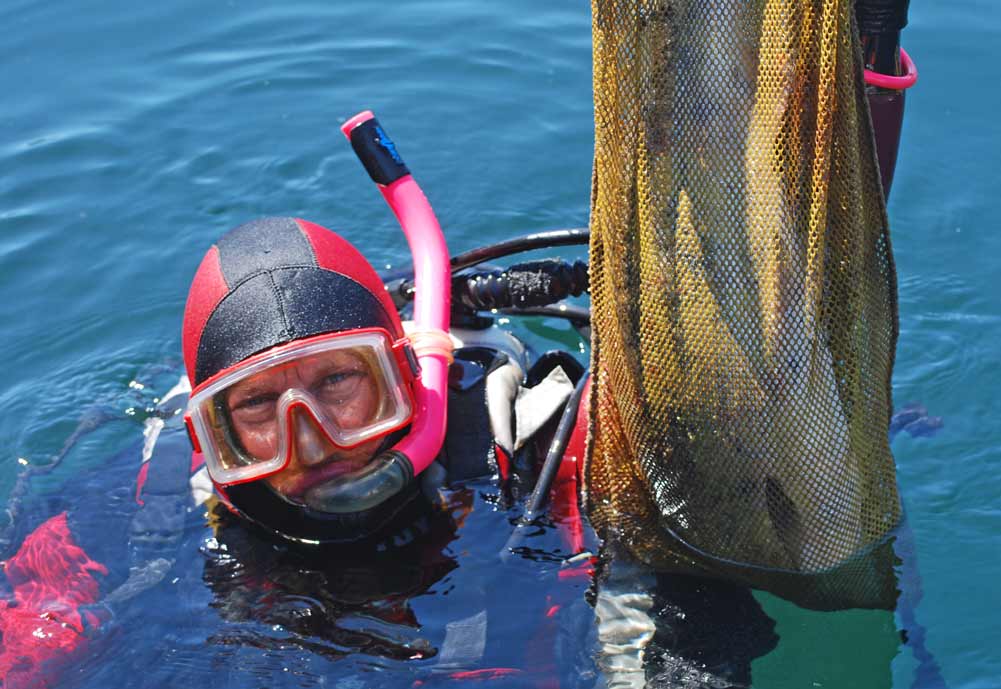
While we were unloading our fishing gear my salmon, the biggest one, slipped out of the bag all three were all in and fell into the water by the dock. Rick tried to catch it and ended up in the water himself while the salmon sunk to the bottom – about 80 feet down. So as not to disappoint wifey having lost her first fish ever, he geared up in 34 Celsius hot sun and dove down to retrieve my fish. When he found it on the bottom there were about 30 rat fish circling wondering what luck had fallen into their laps today. Even when he scooped in up into his goody bag they continued to stare – easy come, easy go fellas.
|
|
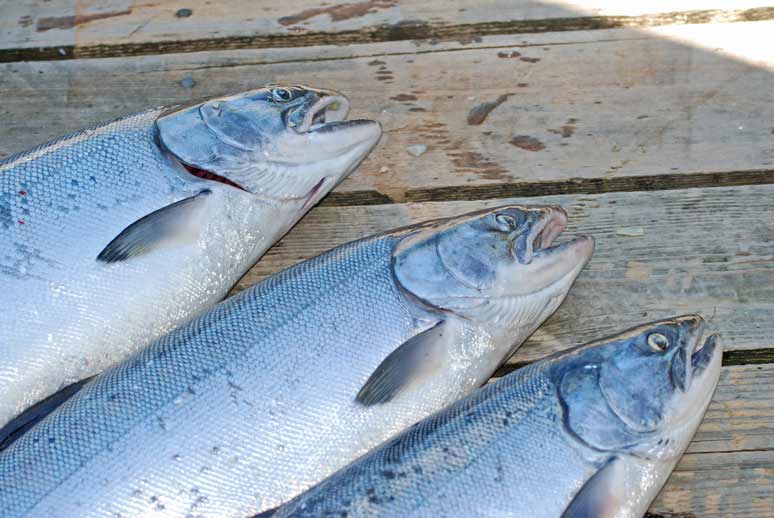
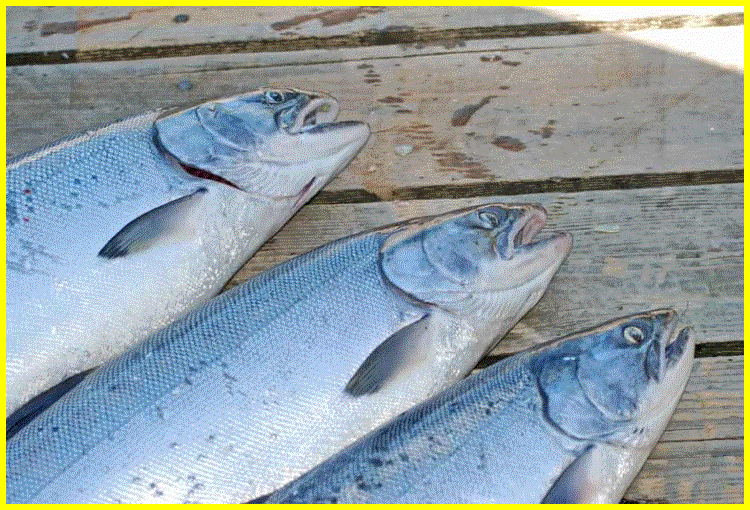
Three lovely Coho from our morning efforts. The largest one on the left was mine! |
|
|
|
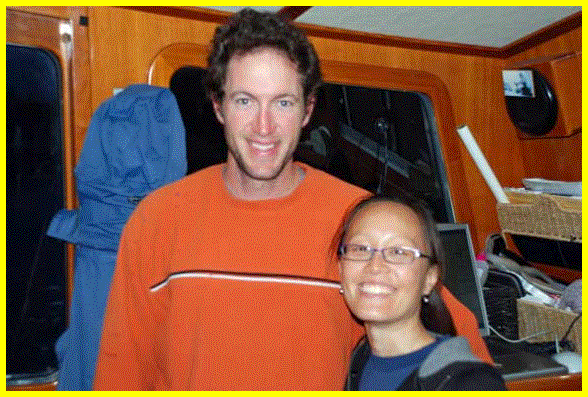
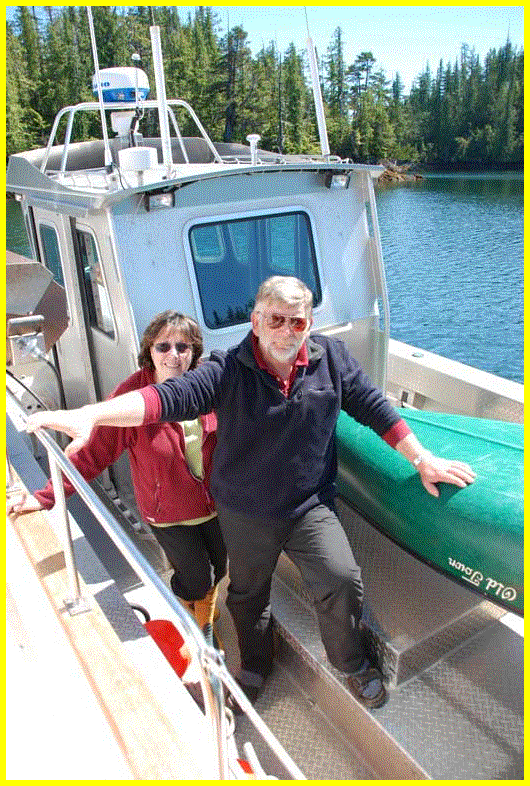
After all was well in the fish department, Gunther from the MV Dickie, snapped our picture on the dock. Everyone was catching Coho in Barnard Harbour and surrounding area. Even inexperienced fishers like ourselves were reelin’ ‘em in. |
|
|
|
|
Kona enjoys a trip to shore in the cool of a stream and into the forest. The dock was very hot with only a small area of shade made by the boats and a roof over the fish cleaning station. The weather was gorgeous but very hot with hardly a breeze to keep cool. The bugs were bad too – horseflies and small black flies that even repellent didn’t seem to stop. |
|
|
|
Old Molly from the Surfbird was feeling the heat too. When the seiners first came to the area of Barnard Harbour, Doug Stewart and his wife Carole were anchored in Barnard Harbour for the opening. We stopped by their boat to say hello to Carole in the evening. Doug was out getting the catch numbers from the seiners. |
|
|
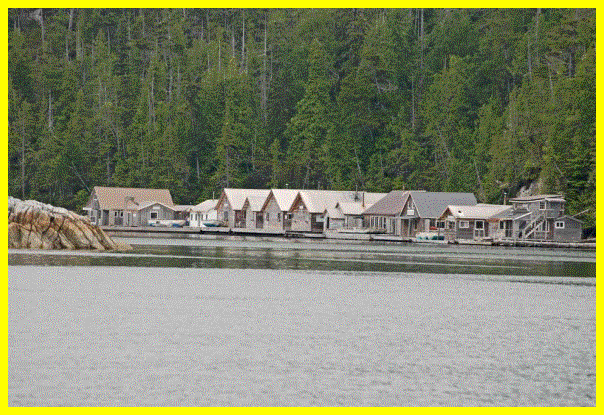
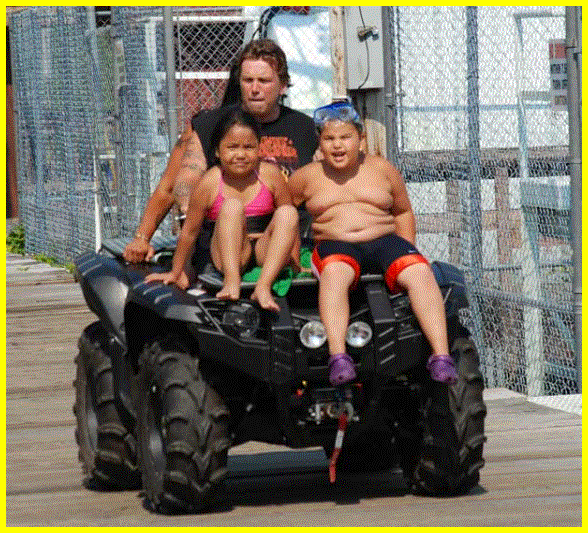
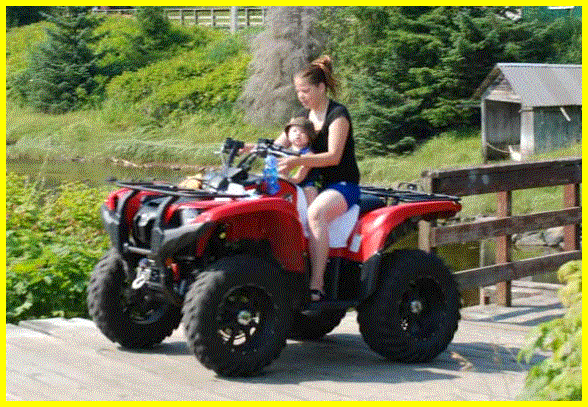
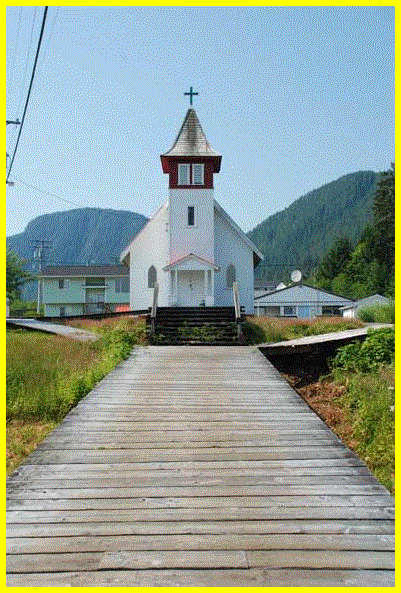
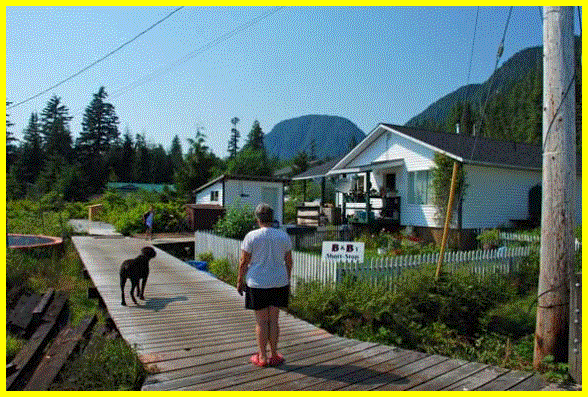
Hartley Bay Harbour just down the inlet from Kitimat. Only accessible by boat. The whole community has no roads but instead has 4.5 miles of boardwalk throughout the place. Everyone gets around on ATVs or golf carts. This small town is very quaint and very quiet. |
|
Ole from the MV Brand New Day, took Rick out with him fishing for halibut. We had spent the better part of the morning trying to catch a halibut but to no avail. One our return, Rick jumped into Ole’s boat and the two of them spent another 3 hours trying to catch one. They returned with a small ling cod and a rock fish which Ole cleaned and gave to us. He and his wife Val are from Edson, Alberta and keep their boat in Kitimat. |
|
|
|
|
|
|
|
|
|
|
|
Family ride to the local swimming creek |
Mom at the wheel |
|
|
|
|
Boardwalk to the Church |
Hartley Bay’s Store – no eggs just pop and chips |
|
|
|